
As physical therapists, one of the main symptoms we see patients for is pain. Pain keeps us from carrying out our normal, daily activities: getting dressed by ourselves, walking up the stairs, completing job tasks, playing basketball, holding our child, or even attending family gatherings. Pain limits us from doing the things we want and need to do, and we want to get rid of it!
However, pain is also our body’s way of looking out for us. It is our alarm system for when something is not quite right, and our attention is needed. When we experience an acute injury, it is important that a pain message is received, so that our body knows that it needs to stop and tend to it. When we place our hand on a hot stove, we need our brain to tell our body to “Move your hand!!” and protect us.
When the alarm is still sounding long after the threat has been removed, that is when pain becomes more of an issue. Pain lasting more than three months, or longer than normal tissue healing, is referred to as chronic pain. When pain becomes chronic or persistent, there are both structural and functional changes within the brain and nervous system, causing one to be more sensitive to stimulus as well as potentially leading to memory loss, cognitive impairments, and motor issues. Chronic pain is associated with multiple other symptoms in about one third of patients, including a combination of irritability, depression, anxiety, and sleep problems.1
Chronic pain and mental health disparities often go hand and hand and result in a challenging cycle. For example, chronic pain may lead to anxiety about the discomfort and uncertainty of the future, and the increase in anxiety in turn leads to an exacerbation of pain perception and sensitivity. While this sounds like a very vicious cycle, the good news is that we can retrain our brains! Often this requires multidisciplinary care aimed at medical management (medicine and/or physical therapy), psychological support, and lifestyle adjustments (exercise, nutrition, and sleep).
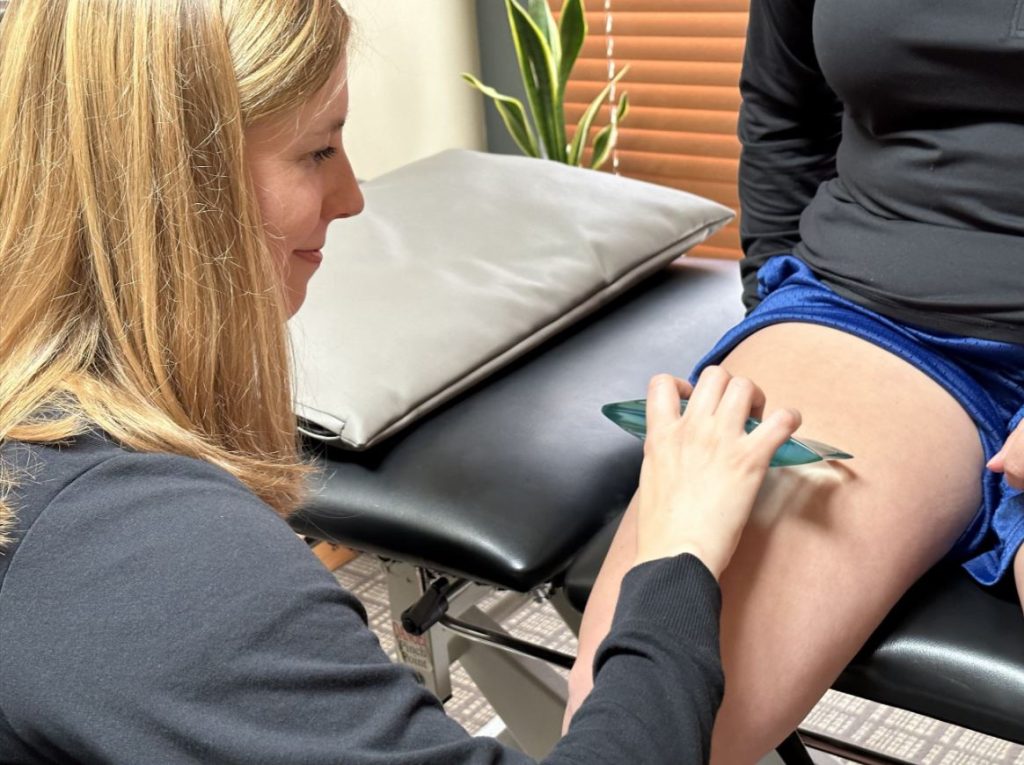
Physical therapy has a lot to offer as one of the primary providers for those dealing with chronic pain. We are educated in many techniques aimed at pain management and tissue healing such as dry needling, IASTM, use of TENS/E-stim and skilled in soft tissue techniques such as soft tissue mobilization, myofascial release, and lymph drainage. We can assist in easing patients back into pain free movement in a safe and effective manner with a program that is tailored to their specific needs. Making sure exercise form is correct and the proper muscles are activating is important to reducing undue stress on the body! Setting up a home or workspace in a way that decreases stress/strain on the body is also important, and another area that we can be of assistance.
Pain may not be completely eliminated with the help of physical therapy, but physical therapists, along with mental health providers, can help to reduce the fear of movement and assist in taking steps towards getting one’s life back. Getting back to the things we enjoy doing (playing with your children, walking down the steps of your deck to get to the garden, independently going to the bathroom and getting dressed) can get our mental health and pain cycle moving in a positive direction and help to improve our overall quality of life.