
When assessing the pelvic floor for symptoms such as incontinence, pelvic pain, and/or prolapse, an important aspect of a physical therapy evaluation includes that of the pelvic floor muscles. Do you know where your pelvic floor muscles are? Are you able to contract them? Relax them? When palpated, do they feel tight and ropey, soft and boggy? Are the tissues tender? This gives the physical therapist a good idea of what is going on directly at the level of the pelvic floor. While this provides a lot of valuable information, it is not the full picture.
Similar to all other areas of the body, the pelvic floor doesn’t function independently. It functions in conjunction with regions above and below it—all the way from the foot to the jaw! Breaking it down to a more simplistic view, one way to visualize the major players involved in pelvic floor function is to visualize the trunk as a pop can.
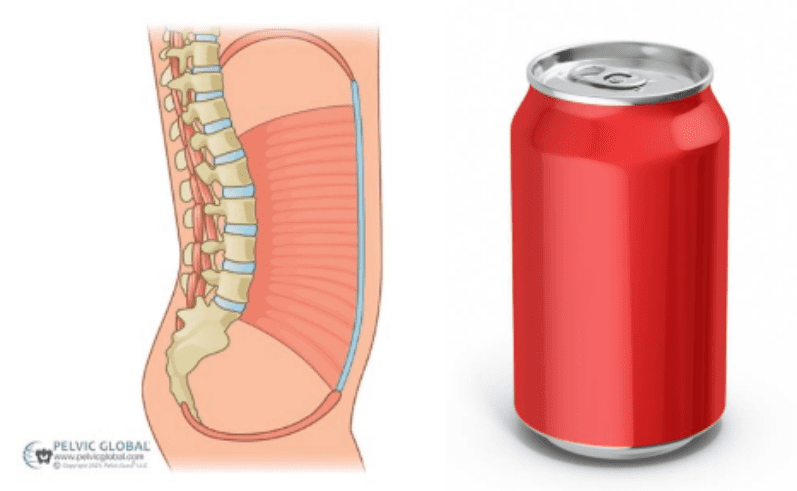
The top of the pop can is the diaphragm, the bottom of the pop can is the pelvic floor, and the sides represent the core (back, front, and lateral) muscles. All of these muscles are supported in part by the bony skeleton as well. All of the “walls” of the pop can are important to maintain a stable container for its contents! The same is true for the pelvic canister. If one aspect of the canister isn’t performing its function, the effects are felt throughout all the other regions. Think of popping the top of the can! It’s much easier to squeeze the can and change its shape and form if the lid is popped! The same is true of the pelvic canister.
Top of the Can (Diaphragm):
A person’s breathing pattern can greatly affect what is happening at the pelvic floor. During breathing, our diaphragm lowers so that our lungs can fill. As our diaphragm lowers, the pelvic floor lowers as well. The analogy I use for this is that of a push pop (upside down)! You push on one end and due to the pressure and force, the other end must also move!

If a person is breathing with a short and shallow breath (diaphragm not descending), then this will limit the amount of movement that is occurring at the pelvic floor with each breath as well. The less movement, the stiffer these muscles and surrounding tissues can become.
Sides of the Can (CORE and Bony Skeleton):
To provide a stable canister or base for this internal pressure system, it is important that our core is strong. Some more obvious factors that could impact our core muscles are pregnancy, surgical procedures, hernias, or diastasis recti. Weakness at the core can place increased stress to the other surrounding “walls” like our pelvic floor!
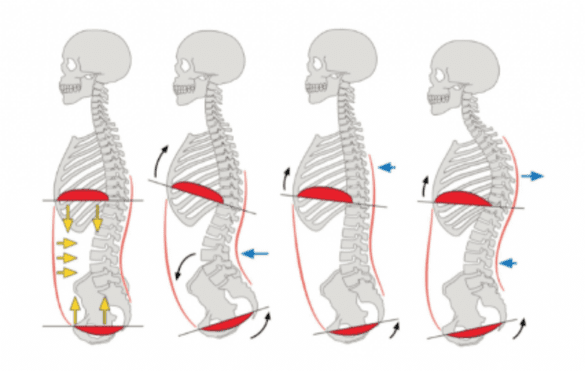
Our posture is also very important for maintaining a stable structure. Take a peak at the skeletal postures below. If you think of them as a pop can, which do you think would provide the most stability and place our muscles and tissues in the most optimal positioning to maintain our internal pressure system?
Bottom of the can (pelvic floor):
Pelvic floor dysfunction can occur directly at the site of our pelvic muscles due to trauma (think child delivery), due to an indirect effect from pressures above (our pop can), or a result of muscle imbalances throughout our hips and other pelvic girdle stabilizers!
Now when we zoom out and look at the full “pelvic canister,” it becomes clear that pelvic floor dysfunction is rarely just a pelvic floor problem. Yes, assessing the muscles locally—strength, coordination, tone, tenderness—gives us essential information. But lasting change happens when we also consider how the diaphragm, core musculature, bony alignment, hips, and even breathing patterns contribute to the overall pressure system.
If the top of the can isn’t moving well, the bottom can’t move well. If the sides are weak or unsupported, the base absorbs more stress. If posture changes the shape of the can, pressure is redistributed in ways the system may not tolerate efficiently. Everything is connected.
For individuals experiencing incontinence, pelvic pain, or prolapse, this perspective is empowering. Treatment is not limited to isolated strengthening—it may involve retraining breath mechanics, restoring core coordination, improving posture, optimizing hip strength, and improving the way pressure is managed during daily activities.
By viewing the pelvic floor as part of a dynamic, integrated system rather than a standalone muscle group, we create a more complete, individualized, and effective approach to healing.